Unions Reject Garment Wage Freeze, Calling $2 Raise Inadequate
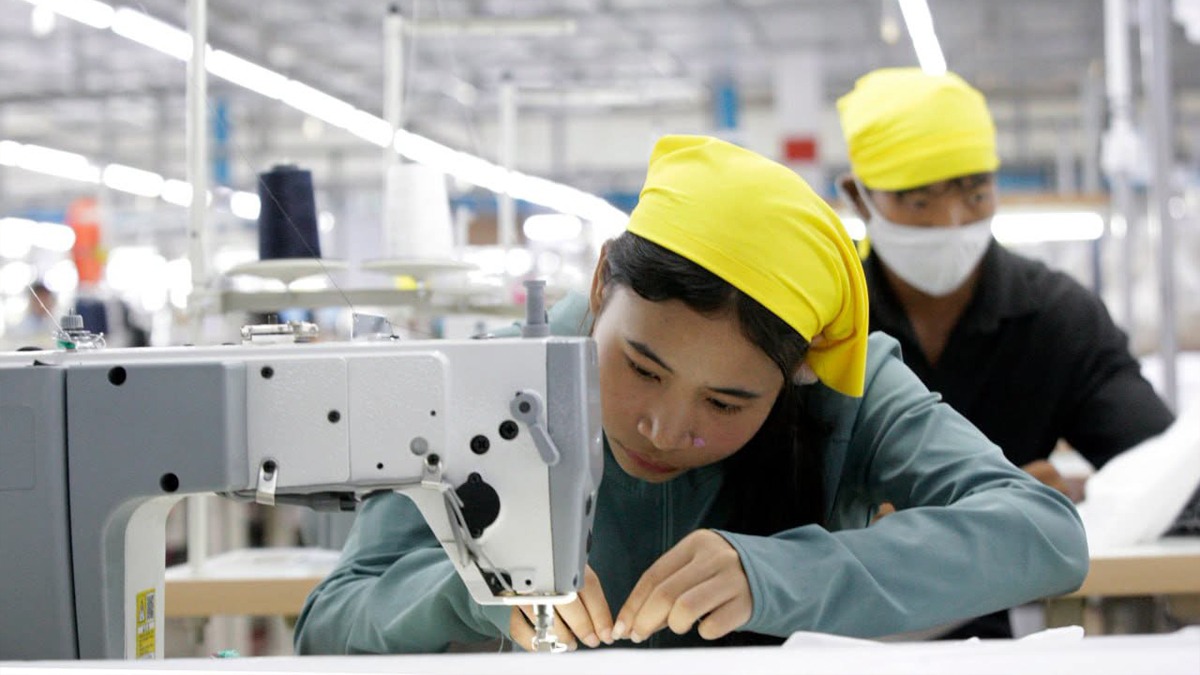
Trade unions, workers, and civil society groups in Cambodia have rejected a decision to keep the 2027 monthly minimum wage for garment and related sectors at $210. They argue the small increase cannot keep up with inflation or the rising cost of everyday goods.
In a joint statement issued on October 5, the federation of unions and civil society organizations said the National Minimum Wage Council voted by an overwhelming majority on September 30 to hold the minimum at $210 per month. The groups noted that this figure is a $2 increase over the current rate, which was reached after intervention from Prime Minister Hun Manet. They said the decision raises serious questions about the council's independence, transparency, and effectiveness.
Separately, Prime Minister Hun Manet stated in a Facebook post that Cambodia will graduate from Least Developed Country (LDC) status on December 19, 2029. He also said Cambodians would reach upper-middle-income status by 2030 and high-income status by 2050, a transformation he attributed to the government's Pentagonal Strategy. He did not explain what data or comparisons supported these projections. Observers said his remarks seemed to show little awareness of, or willingness to acknowledge, the hardships many ordinary citizens face.
In regional news, Thai newspaper Khao Sod reported on October 6 that Thai authorities in Aranyaprathet district of Sa Kaeo province had detained 26 Cambodians, including 23 men and three women. Officials accused them of living illegally in Thailand without valid residence documents. The International Monetary Fund also projected that Cambodia's economic growth would slow from 5% to 3.5% in 2026.
Unions Say the Raise Falls Short
Negotiations with government representatives and factory owners left unions and workers deeply frustrated. Workers had proposed a minimum wage of about $250.66, an increase of roughly $40.66. The figure was based on a study of the actual daily, monthly, and household costs of living. The study surveyed 422 workers from 28 factories in Phnom Penh, Kandal, and Kampong Speu. The proposal was backed by more than 100 unions and civil society groups, as well as international organizations including the Asia Floor Wage Alliance and the Clean Clothes Campaign.
Unions point out that the $2 increase equals just 0.95% of the current minimum wage, while the IMF forecasts consumer prices will rise by about 3.1%. They estimate wages would need to rise by at least $6.51 just to preserve workers' purchasing power. 'A $2 increase is not enough to ease the financial burden on workers and their families,' the groups said.
Workers, they added, are facing higher food prices and growing household debt. Their real earnings continue to shrink because wage increases remain below the inflation rate.
Seang Rithy, president of the Cambodia Youth Power Union Federation (CYPUF), said he was deeply disappointed by the outcome. He argued that a $2 raise does not address the real hardships workers face and does not reflect the seven criteria put forward for the wage talks.