Workers Returning From Thailand Lift Output but Leave Many Families Poorer
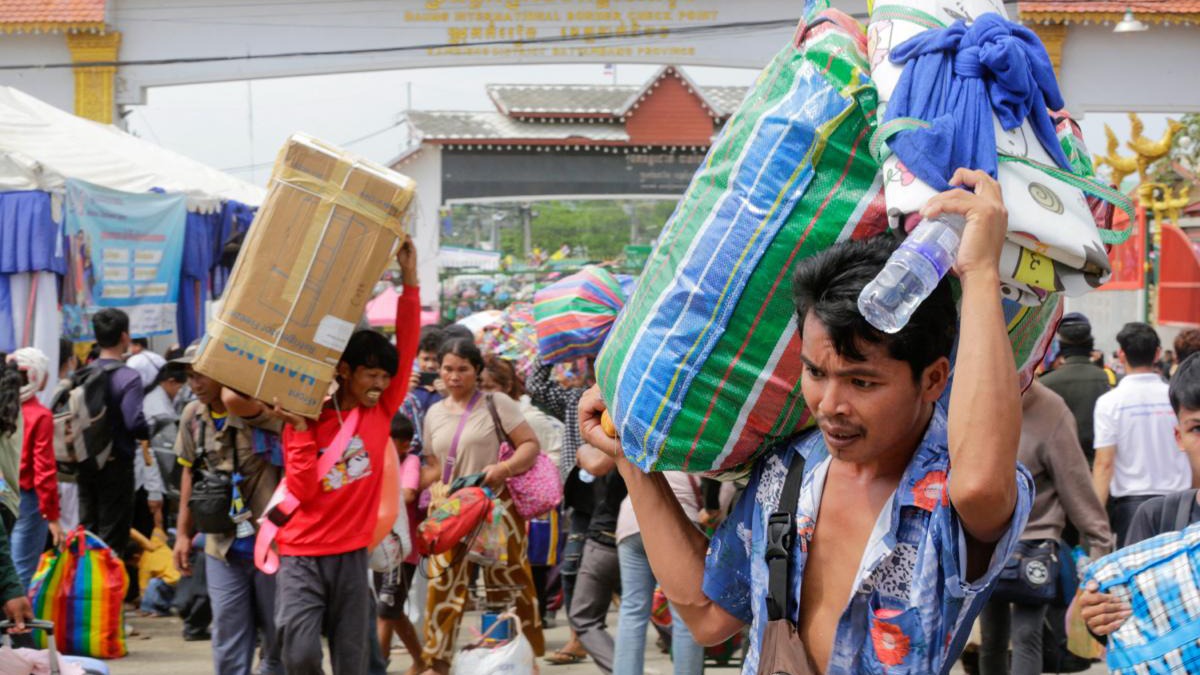
A study by the Cambodia Development Resource Institute (CDRI) finds that the return of Cambodian migrant workers from Thailand is having two opposing effects. It can raise overall economic output, but it is leaving many households worse off.
Nearly one million workers have returned to Cambodia from Thailand, both before and after armed clashes broke out along the Cambodia-Thailand border. In late 2025, the Ministry of Labour and Vocational Training said that about half a million of these returnees had found work. Many of them, however, are taking jobs that differ from their previous ones. Pay is lower, whether paid daily (known as tinika) or monthly (known as masika), and many face heavy debt.
A Sharp Drop in Income
The study cites a woman from Banteay Meanchey province who sold seafood dishes in Thailand before the conflict and earned more than $300 a month. Back in Cambodia, she works at a garment factory and earns $290 a month. That is a fall of roughly 37 percent in monthly income.
The International Monetary Fund projects that inflation, the rise in the price of everyday goods, will reach nearly 6 percent this year, adding further pressure on household budgets.
Growth Without Better Living Standards
Economists point out that a growing population does not automatically mean more people are working productively or that the economy is expanding in a meaningful way. Cambodia's population has now grown to nearly 20 million. Even if gross domestic product rises, individual families may not become more comfortable.
Remittances Fall Sharply
Money sent home by Cambodian workers in Thailand has dropped by 60 percent. The Ministry of Labour and Vocational Training reported that remittances from Cambodians working in Thailand totaled nearly $2 billion in 2025, down from nearly $3 billion in 2024.